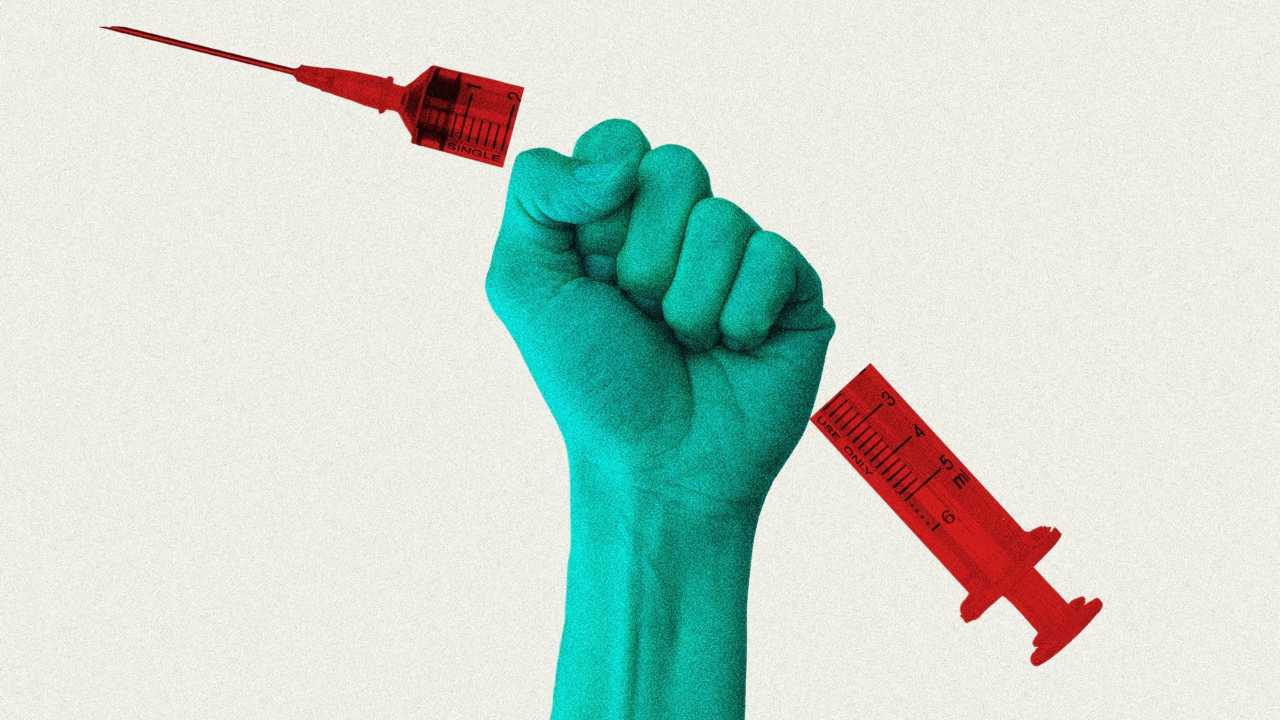
As a measles outbreak poses a growing threat for public health in the United States, many experts point to a vaccine-hesitancy climate that leads to the rising percentage of unvaccinated children. Health misinformation has a crucial part in this situation, with myths as the one that vaccination is linked to autism receiving wide circulation.
But, what does the measles outbreak have to do with Amazon?
A CNN report, published at the end of February 2019, pointed to Amazon’s role in the promotion of anti-vaccination misinformation. According to the report, the results of a “vaccine” search on the platform land to a page heavy on anti-vaccination books and movies. The first listing book is even a sponsored ad, for which Amazon was paid, and features misinformation around vaccines. The amount of money paid for the placement was refused to be commented by Amazon. At the same time, anti-vaccination, misleading-titled books, which disguised as providers of neutral information on the topic, were also prominent in the platform.

Wired journalist Renee Diresta also examines the issue of gameable algorithms as a factor for the several anti-vaccination books on the Best-selling list of the Epidemiology section. As she notes, search, trending, and recommendation algorithms can be gamed easily, resulting to an artificially engineered virality of marginal ideas. The holders of those ideas are ideologically motivated to produce large amounts of relating content, in this case customer reviews, that feeds the algorithms. Suspect accounts also coordinate often to leave similar reviews. The volume of reviews, along with the rankings are then influencing Amazon’s customers, raising the perceived quality of questionable material. Indicatively, a pseudoscience book called “The truth about cancer” had almost exclusively 5-star reviews, more than half of which were considered possibly fake by Reviewmeta.
The question then is how Amazon can combat this problem, while avoiding the pitfall of censorship. While other platforms, such as YouTube and Facebook, have moved towards combating health misinformation, Amazon has shown slow reflexes, in a consistent behavior held over the years in other criticisms that it refused to comment on. However, a hesitant start was initiated when it pulled some anti-vaccine documentaries from its Amazon Prime platform.
With the proliferation of health misinformation, and misinformation in general, the consequences are becoming more evident every day. The measles outbreak is only a tiny fraction of the way that false information damages our lives. It’s high time for the tech giants to recognize their crucial role as fertile grounds in one of the biggest problems of the 21st century and assume responsibility by adopting drastic measures.
References
Belluz, J. (2016, September 09). Amazon is a giant purveyor of medical quackery. Retrieved fromhttps://www.vox.com/2016/9/6/12815250/amazon-health-products-bogus
Caron, C. (2019, March 07). Facebook Announces Plan to Curb Vaccine Misinformation. Retrieved from https://www.nytimes.com/2019/03/07/technology/facebook-anti-vaccine-misinformation.html
Charles, S. (2019, February 28). Congressional hearing on measles outbreak highlighted by anger, disruptions. Retrieved from https://www.nbcnews.com/storyline/measles-outbreak/measles-outbreaks-lawmakers-tackle-vaccine-misinformation-conspiracies-n977261
Diresta, R. (2019, March 05). How Amazon’s Algorithms Curated a Dystopian Bookstore. Retrieved from https://www.wired.com/story/amazon-and-the-spread-of-health-misinformation/
O’Donovan, C. (2019, February 22). YouTube Just Demonetized Anti-Vax Channels. Retrieved from https://www.buzzfeednews.com/article/carolineodonovan/youtube-just-demonetized-anti-vax-channels
O’Donovan, C. (2019, March 01). Amazon Removed Anti-Vax Documentaries From Prime Video. Retrieved from https://www.buzzfeednews.com/article/carolineodonovan/amazon-removes-anti-vaccine-videos
Sarlin, J. (2019, February 27). Anti-vaccination conspiracy theories thrive on Amazon. Retrieved from https://edition.cnn.com/2019/02/27/tech/amazon-anti-vaccine-books-movies/index.html
Scutti, S. (2019, January 29). Measles: At least 107 cases confirmed across 21 states. Retrieved from https://www.cnn.com/2018/08/15/health/us-measles-cases-cdc/index.html
Sun, L. H. (2018, October 11). Percentage of young U.S. children who don’t receive any vaccines has quadrupled since 2001. Retrieved from https://www.washingtonpost.com/national/health-science/percentage-of-young-us-children-who-dont-receive-any-vaccines-has-quadrupled-since-2001/2018/10/11/4a9cca98-cd0d-11e8-920f-dd52e1ae4570_story.html?utm_term=.786bc1eaf37c

 Invisible Environments