
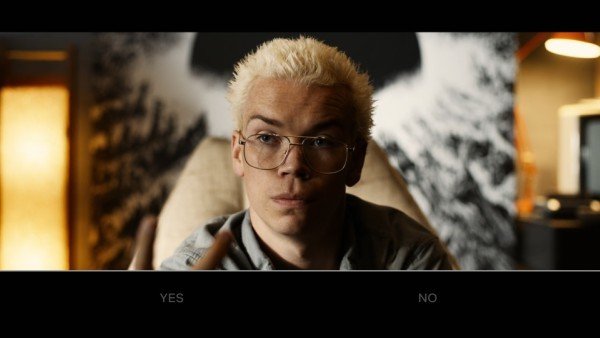
On 28 December 2018, the science fiction anthology series Black Mirror released Bandersnatch on Netflix, an interactive episode which would be gamechanging for the traditional storytelling format. Set on 1984, Bandersnatch follows the life of a young programmer as he is working on a “choose your own adventure” video game. But here is the catch: through decision boxes that appear on the screen during the episode, viewers can make decisions about the story’s development. From deciding which song the protagonist will hear on the bus, to important life-changing choices, his fate is on the hands of the audience.

The episode has been praised for its revolutionary format and characterized as a “sudden upending of every convention you depended on for your entertainment and sanity”. It seems to be a direct product of our times, native to the digital landscape and indicative of new storytelling formats. Its branching story pathways bring to mind Interactive Digital Storytelling systems, where an active user affects the way the story unfolds, and where the developer and the author produce a storyworld to be experienced by the interactor. (Smed, Suovuo, Trygg, Skult & Hakonen, 2019). In this context, Bandersnatch is a truly revolutionary artwork that could be a start of a new film genre or an ancestor to an interactive streaming video format of the future.
But there is a dark side as well.
The decisions viewers make along the narrative branches of Bandersnatch are collected by Netflix, in order to “inform personalized recommendations” and to “better recommend tailored content to individual viewers”. In light of the Facebook and Cambridge Analytica data breach that brought the matter of personal data use in the spotlight, this arises important questions about the possible ramifications. The viewers’ decisions provide valuable data about various aspects, starting from musical and product preferences and spanning to insights about human behavior (the viewer is asked at some point of the episode if the protagonist should “kill dad” or “back off”). Could that be seen as the start of a new form of data mining that provides deep psychological insights? These data will undoubtedly be used for financial purposes but at what cost?
Black Mirror has always been a show about the sinister sides of technological advancements. The same meta level irony that arises by a “choose your own adventure” video game programmer being the subject of us choosing his adventures can be applied to a show talking about grim technological futures, when in fact it becomes the paver of a dark technological path itself.
References
Damiani, J. (2019, January 02). Black Mirror: Bandersnatch could become Netflix’s secret marketing weapon. Retrieved from https://www.theverge.com/2019/1/2/18165182/black-mirror-bandersnatch-netflix-interactive-strategy-marketing
Griffin, D. (2018, December 28). Netflix’s Black Mirror: Bandersnatch Review. Retrieved from https://www.ign.com/articles/2018/12/28/netflixs-black-mirror-bandersnatch-review
Heritage, S. (2018, December 28). Black Mirror’s Bandersnatch: Charlie Brooker’s meta masterpiece. Retrieved from https://www.theguardian.com/tv-and-radio/2018/dec/28/black-mirrors-bandersnatch-charlie-brookers-meta-masterpiece
Mangan, L. (2019, January 01). Black Mirror: Bandersnatch review – the TV of tomorrow is now here. Retrieved from https://www.theguardian.com/tv-and-radio/2019/jan/01/black-mirror-bandersnatch-review-charlie-brooker-netflix-tv-of-tomorrow-is-now-here
Miller, L. S. (2018, December 28). ‘Black Mirror: Bandersnatch’ Review: Groundbreaking Choose-Your-Own Adventure Storytelling. Retrieved from https://www.indiewire.com/2018/12/black-mirror-bandersnatch-review-groundbreaking-interactive-fun-netflix-spoilers-1202031049/
Rulmy, J. (2019, February 13). “Black Mirror: Bandersnatch” was used as a Netflix data mining experiment. Retrieved from https://www.worldofreel.com/blog/2019/2/was-black-mirror-bandersnatch-a-netflix-data-mining-experiment
Smed, J., Suovuo, T. “., Trygg, N., Skult, P., & Hakonen, H. (2019). The Digital Campfire: An Ontology of Interactive Digital Storytelling. In J. Thakur (Ed.), Modern Perspectives on Virtual Communications and Social Networking (pp. 174-195). Hershey, PA: IGI Global. doi:10.4018/978-1-5225-5715-9.ch007

 Invisible Environments
It is actually true that Netflix’s Bandersnatch has been accused of being something more than the ideal, personalized movie for the audience and that the answers collected by the company did not actually help the narrative but in fact were gathered as valuable data to be used as a business advantage. Netflix developed an internal data infrastructure capable of driving ensured success for Netflix’s future releases.
However, this isn’t a new territory for Netflix since it already collects behavioral data from the users the moment they sign in. According to these data, Netflix suggests users what to watch based on their previous actions, assuming they are going to be consistent concerning their watch history. With Bandersnatch though, Netflix was able to collect additional data on users’ preferences (ex. cereal brand, Kellogg’s vs General Mills) by asking questions that did not have an actual impact on the story but the company could take advantage of these valuable information, by selling them to other companies. Recommendation engines would surely pay huge prices to have insight in such information. The streaming company did indeed release information about some of the users’ choices. Fun facts: 60% percent of the audience preferred Kellogg’s, over half decided to spill their tea instead of shouting at dad. More sensitive choices were not published (jumping off the bridge, killing dad). However, they have been collected and analyzed for psychological and sociological insights.
Given the fact that Black Mirror is a show dealing with the dark side of technological advancements, and that companies like Google and Facebook have detailed profiles of us and have gathered dozens of insights through the years, maybe we are like Stefan’s lab rats, participating in an experiment where everything is collected, analyzed and re-presented in the most desired way.
References:
Damiani, J. (2019). Black Mirror: Bandersnatch could become Netflix’s secret marketing weapon. Retrieved from https://www.theverge.com/2019/1/2/18165182/black-mirror-bandersnatch-netflix-interactive-strategy-marketing
Drum, N. (2019). Is Netflix’s ‘Black Mirror: Bandersnatch’ Possibly a Data Mining Tool? Retrieved from https://comicbook.com/horror/2019/01/07/black-mirror-bandersnatch-data-mining-netflix/
Matthews, J. (2019). Netflix Review: Bandersnatch. Retrieved from https://digitalcollections.dordt.edu/cgi/viewcontent.cgi?article=2033&context=faculty_work
LikeLike
Very interesting article on how data mining is performed today. It depicts how art and media will advance in the digital era.
But apart from the dark side of the Web, Bandersnach is not actually using a rather new narrative technique, nor a new data collection method.
Regarding the innovative script plot, there have been plenty predecessors in literature, theater, cinema and gaming that have also used the multiple endings trick, especially in Science Fiction and Children’s Literature.
Data mining and data collection is an important issue regarding the aspect of privacy and personal information but I wouldn’t necessarily consider this practice a bad thing. First of all, this practice is widely performed through various platforms (with the user’s consent), like Google, Facebook etc. Our whole digital presence is lying upon our personal data which are mainly used in order to offer us a completely personalized digital experience.
In the case of Bandersnach, a more user-centered data collection regarding the aesthetics, the preferences and the optimum practices in media and art could subsequently lead to even more interesting, disruptive and innovative content. Knowing what the audience wants can optimize the future products.
LikeLike