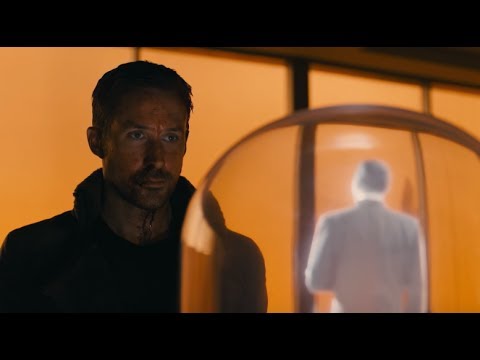
A miniature hologram of Frank Sinatra sings in a dystopic abandoned bar.
We don’t often think about digital humans, and when the job is done right we don’t necessarily notice their existence at all. Movies like The curious case of Benjamin Button, Blade Runner 2049 and performances like the late’s Tupac Shakur with Snoop Dogg and Dr. Dre at the 2012 Coachella Festival and Michael Jackson’s 2014 act at the Billboard Music Awards, prove that holography has already introduced a brave new genre of entertainment that frankly no one really anticipated.
Based on a 200-year-old technique, the Pepper’s Ghost Illusion is actually a technique that creates holograms generated as a 2D image that is projected in a specific way, using an invisible angle-reflective material and high-power projectors or LEDs that project video with black backgrounds and give the illusion that you are looking at a live person in a three-dimensional space.
So, what if your favorite stars’ footage was no longer limited? Can you imagine Marilyn Monroe singing happy birthday to the next POTUS? The concept of re-creating iconic stars and giving a new extension to their “idea” is extremely tempting but who owns their existence and who can decide their afterlife presence?
Holography is gradually becoming popular in the visual world and the showbusiness. Music groups like the Gorillaz and A Perfect Cycle are using holographic technology to promote their work. Movies like Denis Villeneuve’s Blade Runner 2049 integrate holographs of Frank Sinatra and Elvis Presley in a matryoshka meta-appearance. Nintendo is bringing to life iconic heroes of gaming and Vocaloids are a big hit in Japan, with the world’s first digital diva, Hatsune Miku, already celebrating her 10th birthday as holographic super star.
Science Fiction introduced us to the concept of holograms blended in life, but they can no longer be considered as sci-fi preserve. Technology is evolving and expanding the spectrum of potentials leading into a new era in entertainment.

 Invisible Environments
Holography is indeed becoming quite popular in the showbusiness world but it can also be used very effectively in several fields. In the marketing world, this is not a new concept, in fact Coca Cola and Kellogg’s have been using the technique since 2009. Such techniques engage the audience with the intended communication message and in a sense, they are bringing the product to life. Holography can also play an important role on consumer experience by expressing a brand identity rather than classic text and image.
Another possible utilization of holograms is their display in workplace or universities. Attendees would not be required to be physically present and location or other related variables would no more be an issue.
What about the gaming industry? No more hardware needed, gamers would be able to live the full experience on another level.
Even the health sector could take advantage of hologram technology, in cases where assistance in needed in the form of representation.
American companies have already started developing holographic phones and charging them for 1,600$ each. The idea under development right now, is the creation of a hologram that can be touched and interact. Imagine how many marketing possibilities will be arise with the use of such technology.
However, the hologram market has been stable through the last years. Is there a technological obstacle or are we not ready yet for such technological advancements?
References:
Kalimar, A. N. (2018). Can hologram projection be the next generation marketing technique? Retrieved from https://brandthechange.com/featured/hologram-projection/
Garang, T. (2018). Hologram for future marketing. Retrieved from https://medium.com/tunapanda-institute/hologram-for-future-marketing-ab85a021e660
Beaubien, G. (2009). Marketers starting to use 3-D holograms. Public Relations Tactics, 16(7), 12. Retrieved from https://acg.idm.oclc.org/login?url=http://search.ebscohost.com/login.aspx?direct=true&db=bth&AN=44573681&scope=site
LikeLike