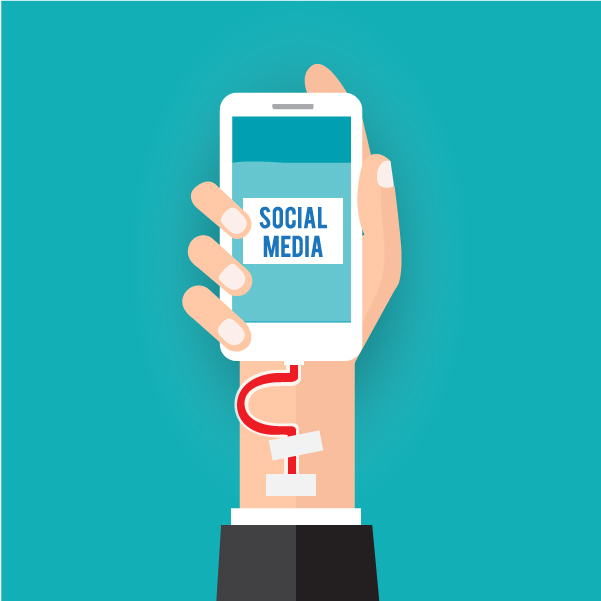
The emergence and growth of social networking sites has drawn the attention of researchers, since SNSs have captivated hundreds of millions of users on an international level and have managed to become an integrated part of the users’ daily lives. However, research findings indicate that the primary audience of such sites is gradually increasing its social networking usage and concerns have been raised in relation to damaging effects originating from such excessive usage levels.
SNSs provide short-term positive effects (self-esteem, self-expression, maintenance of relationships) but also have the potential of becoming an addictive habit in the long run, since they are correlated with high levels of deficient self-observation. The American Psychiatric Association has not yet listed SNSs addiction as a mental illness, but other related research results have defined SNSs addiction by the six standard characteristics of addiction disorders: salience (constant thinking of SNSs use), tolerance (increasing time spent on SNSs), mood modification (mood improvement/collapse by the use of SNSs), relapse (cannot effectively reduce their SNSs use), withdrawal symptoms (becoming nervous when they cannot access SNSs) and conflict (interpersonal problems caused by excessive use).
SNSs addiction is related with factors such as demographic variables, mental health variables such as depression and anxiety, and also with personality traits such as narcissism and inability to communicate within traditional interactions. In addition, individuals who are narcissists or/and rely on SNSs to increase their self-esteem are more likely to engage in addictive use and face negative social consequences and problems in their social lives. Overall, SNSs addiction “thoroughly moderates the relevant positive link between self-centeredness and stress symptoms” which confirms that egotistic individuals are more vulnerable to develop addictive social networking behaviors. Also, individuals who are exposed to high levels of perceived stress and use SNSs for alleviation purposes, are subject to develop SNS addiction.
There is a significant need for further research and evidence in the field of behavioral addictions in order to thoroughly examine and understand media consumption behavior, from initial adoption and casual use, to addiction and obsession, which turn out to have catastrophic consequences in users’ lives.
References
Brailovskaia, Julia & Margraf, Jürgen. (2017). Facebook Addiction Disorder (FAD) among German students—A longitudinal approach. PLOS ONE. 12. e0189719. 10.1371/journal.pone.0189719.
Burwell, C., Lazarou, G., Rothchild, N., & Shackelford, V. (2018). Social Networking Site Use and Depressive Symptoms: Does Facebook Activity Lead to Adverse Psychological Health? Linguistic & Philosophical Investigations, 17, 141–158. https://doi-org.acg.idm.oclc.org/10.22381/LPI1720188
Tong, S., Vitak, J., & Larose, R. (2010). Truly Problematic or Merely Habitual? An Integrated Model of the Negative Consequences of Social Networking. Conference Papers — International Communication Association, 1. Retrieved from https://acg.idm.oclc.org/login?url=http://search.ebscohost.com/login.aspx?direct=true&db=ufh&AN=59227134&scope=site

 Invisible Environments
It is true that social media platforms are addictive by nature, since this inflicted addictiveness is part of their business strategy. SNSs’ profits are directly linked with the amount of time we spend on the platforms. The user engagement drives the advertising activity, which in turn produces advertising revenue.
The question then is why are we so hooked on our devices? There are several reasons that could explain this behavior, apart from the obvious gratifications of validation and belonging. One of those reasons is the so-called FOMO. According to a fix infographic, 67% of users feel they miss things during their absence from SNS. This feeling could lead to excessive social media use, in order to reassure ourselves that we don’t miss out.
At the same time, our brain chemistry plays an important role as well. More specifically, a 2011 Harvard study found that the process of sharing information about us triggers a part of the brain that is associated with pleasure. It goes without saying that this feeling is desired and its pursuit becomes a driver for addiction.
The discussion of the reasons could be endless, but one issue remains: should the social media sites continue being unregulated environments? The deliberate infliction of addictiveness is only one of the issues that paint the social media sites in a grim light. When other problems, such as fake news and data privacy issues are added to the pile, the need for regulation all the more intensifies.
The fix infographic can be found here: https://www.fix.com/blog/is-social-media-bad-for-your-health-infographic/
The 2011 Harvard study can be found here: https://www.ncbi.nlm.nih.gov/pmc/articles/PMC3194102/
LikeLike